


Cutting Against the Grain

Why lathe-cut vinyl is powering the next wave of independent releases.
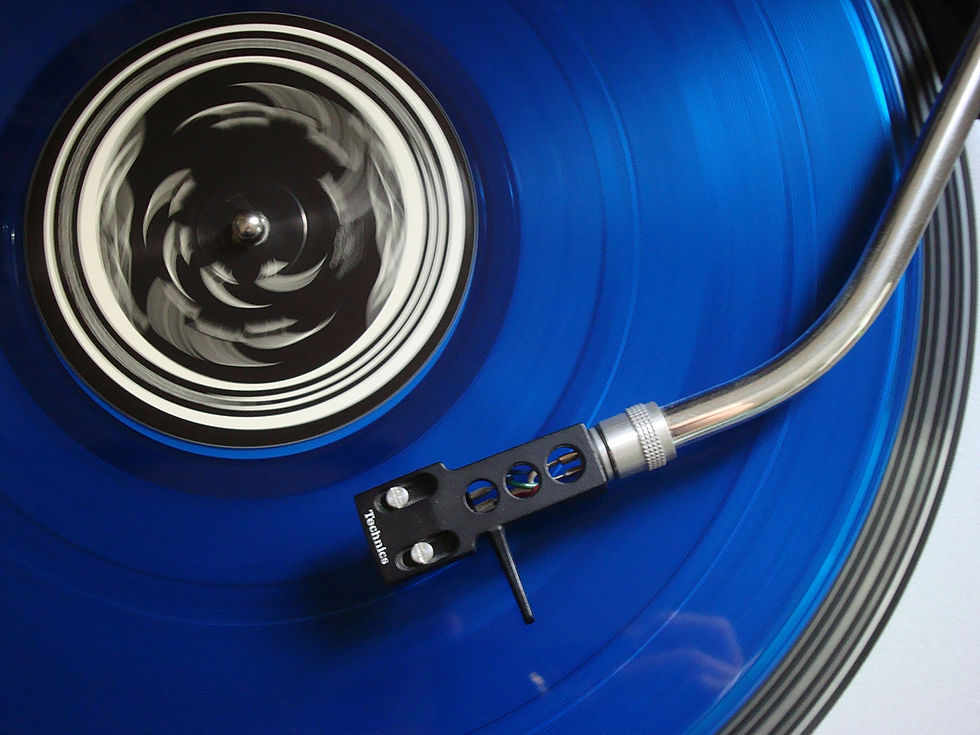
There’s a quiet shift happening in the world of physical music. Not loud, not mass-produced, not stamped out in anonymous quantities of 500 or 1000. Instead: cut, one at a time, groove by groove, record by record.
This is lathe-cut vinyl - and it’s becoming one of the most important tools for independent labels navigating a landscape where traditional pressing is increasingly expensive, slow, and inflexible.
At ForgeMaster Records, we’re leaning into that shift. Not as a compromise - but as an opportunity.
What Is Lathe-Cut Vinyl?
Lathe cutting is the original method of making records. Before mass production, every record was cut individually using a lathe - a precision machine that engraves audio directly into a disc in real time.
Here’s how it works:
A cutting stylus physically carves grooves into a blank disc (often polycarbonate or PVC)
The audio is fed directly into the lathe - what you hear is what gets cut
Each record is made one at a time, rather than pressed from a mould
Historically, this process was used to create master lacquers for pressing plants. But today, modern lathe-cutting specialists produce finished, playable records directly - no pressing required.
Are Lathe-Cut Records “As Good” as Pressed Vinyl?
There’s a long-standing myth that lathe-cut records are somehow inferior. That might have been true decades ago - but modern lathe cutting has evolved significantly.
In practice, the differences are minimal - and often negligible for listeners.
Why lathe cuts hold up:
Direct signal path: The audio is cut straight into the disc with no intermediate stamper stage, reducing generational loss.
Modern equipment: Contemporary lathes use improved stylus technology and digital control systems.
Short-run optimisation: Because each record is cut individually, engineers can fine-tune levels and spacing more precisely.
What about durability and sound?
Lathe cuts may wear slightly faster over very high play counts - but for typical listening, they remain highly durable.
Frequency response and dynamic range are comparable, especially for the kind of guitar-driven, DIY, and alternative music that thrives on character rather than clinical perfection.
In fact, in some circles - particularly dubplate culture and experimental scenes - lathe cuts are prized for their immediacy and uniqueness.
The Real Problem: Pressing Plants and the 100+ Barrier
For independent labels, the challenge isn’t just how records are made - it’s how many you have to make.
Most traditional pressing plants require:
Minimum orders of 100-300 units (often more)
High upfront costs (typically £1,000-£2,000+ depending on format and finish)
Long lead times (often 8-16 weeks, sometimes longer during peak demand)
Even though the cost per unit is lower, the total financial risk is significantly higher.
That’s a gamble - and not always a smart one.

Why ForgeMaster Is Leaning Into Lathe Cuts
This is where lathe cutting changes everything.
Instead of committing to hundreds of units upfront, we can:
Produce ultra-limited runs (sub-50 copies)
Test demand in real time
Recut additional copies if needed
Avoid sitting on unsold stock
Keep releases financially viable for both the label and the artist
Yes - the cost per unit is higher. But the risk is dramatically lower.
And for a label like ForgeMaster, that trade-off makes perfect sense.
Introducing: The ForgeMaster Singles Club
We’re formalising this approach through a new series:
The ForgeMaster Singles Club
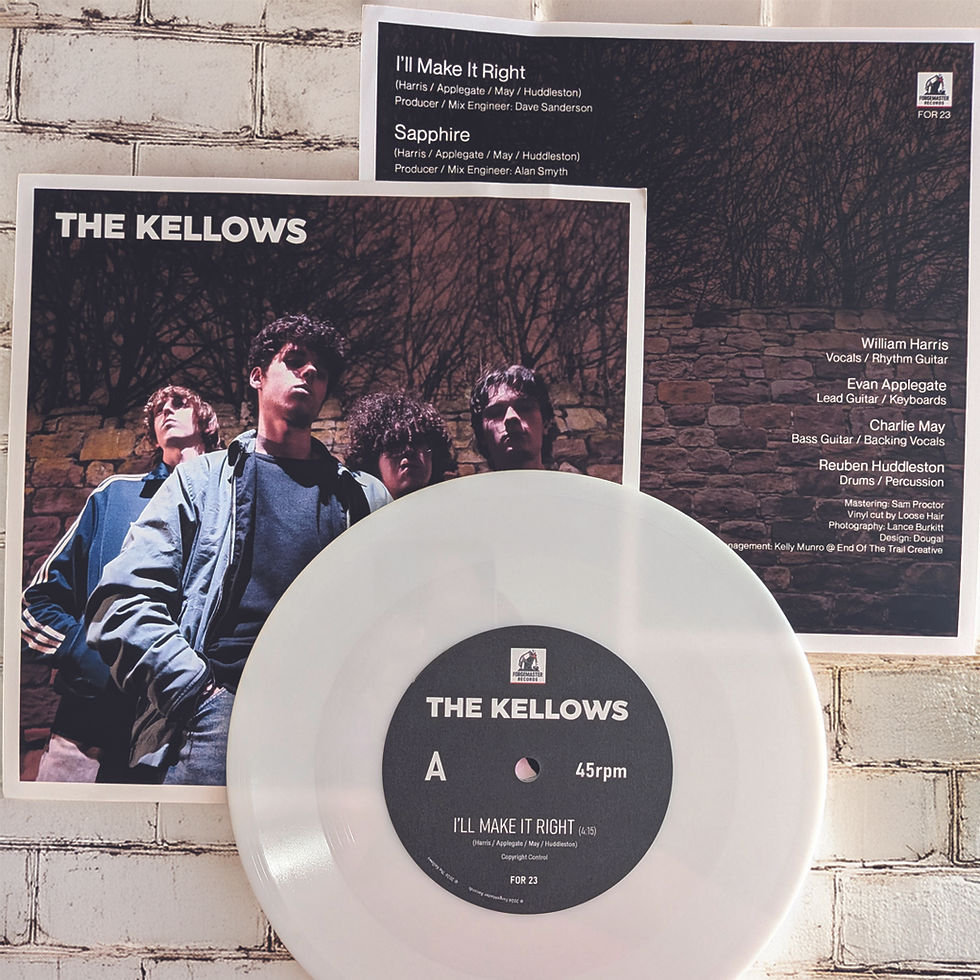
A run of limited edition, lathe-cut 7" records, each one:
Produced in small quantities
Potentially hand-numbered or uniquely finished
Released with a sense of immediacy - closer to how music actually moves
Designed to be collected, not just consumed
These aren’t mass-market products.They’re artefacts.
Each release captures a moment - a band, a track, a point in time - without the delay, compromise, or financial overreach of traditional manufacturing.
A Different Kind of Value
There’s a tendency to measure vinyl purely in terms of unit cost.
But that misses the point.
Lathe-cut records offer something else:
Agility – release music when it matters
Exclusivity – genuinely limited editions
Sustainability (in practice) – no overproduction, no dead stock
Connection – closer alignment between artist, label, and listener
In a world where streaming has made music infinitely reproducible, scarcity - when handled honestly - becomes meaningful again.
Final Thought
Lathe cutting isn’t a workaround. It’s not second best.
It’s a return to something more direct, more intentional, more human.
And for independent labels navigating the realities of 2026 - it might just be the most important format shift since vinyl came back in the first place.
If you’re looking to own something that wasn’t stamped out by the thousand, keep an eye on the ForgeMaster Singles Club.
Because sometimes, the future of music looks a lot like the past - just cut a little sharper.


Comments